Dynafiber
Dynafiber
Dynafiber
Industrial-grade optical transceivers engineered for Fast Ethernet switches, converters, and legacy SDH rings in highly humid and marine environments.
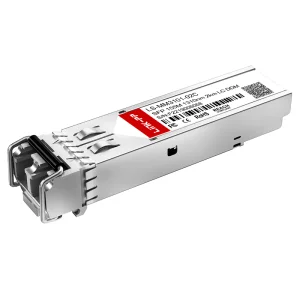
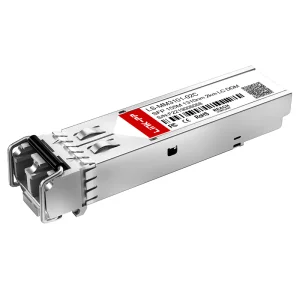
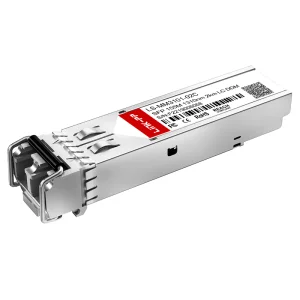
The Maldives, an archipelago consisting of 26 natural atolls and over 1,000 low-lying coral islands, faces one of the most geographically challenging environments for telecommunications infrastructure. Building a unified information network across miles of deep ocean requires a hybrid deployment of submarine fiber optic cables, microwave backhaul links, and localized optical distributions. While massive undersea trunks carry multi-terabit loads between international landing stations in Malé, Hulhumalé, and foreign hubs, the localized processing of data relies heavily on robust, legacy systems.
In this specific geographical context, 155M (Fast Ethernet / STM-1) and 622M (STM-4) SFP modules serve as the operational bedrock. Many remote island communities, localized smart luxury resorts, marine transport centers, and offshore utility grids (run by municipal agencies like Fenaka and STELCO) operate industrial networks configured on legacy SDH (Synchronous Digital Hierarchy) and Fast Ethernet rings. This technology path is deliberately sustained because of its long-established stability, minimal power consumption profile, and resilience over long single-mode fiber (SMF) spans.
Coastal and harbor control systems rely on 155M switches to manage security, vessel tracking systems, and lighthouse communications reliably across saline ports.
Overwater villas and remote island resorts integrate 155M/622M modules into fiber rings to manage decentralized power generators, fresh water RO plants, and waste systems.
Optical modules deployed in the Maldives require specialized physical-vapor-deposition (PVD) anti-corrosion coating to resist salt spray and moisture intrusion.
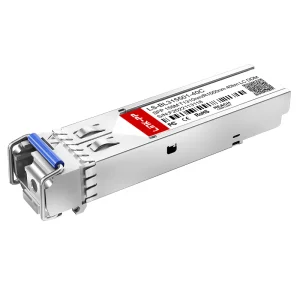
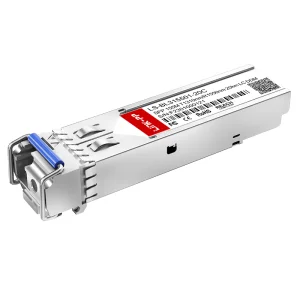
Additionally, fiber resources between islands are highly expensive and difficult to scale. Utilizing BiDirectional (BiDi) Single-Mode SFP transceivers operating over a single fiber core via Wavelength Division Multiplexing (WDM) represents a substantial cost-saving measure. By deploying TX-1310nm/RX-1550nm matching pairs, network administrators in Malé and outlying atolls double their existing fiber transmission capacity without running new subsea cables.
In an era dominated by 100G, 400G, and 800G high-performance computing datacenters, the global market for sub-gigabit optical transceivers (specifically 155Mbps and 622Mbps) remains surprisingly stable and vital. In industrial communication, power grid automation (IEC 61850 networks), railway signaling, and municipal sewage management, speed is often secondary to absolute reliability, determinism, and legacy device compatibility.
Major industrial automation brands such as Hirschmann, Moxa, Siemens, and Phoenix Contact have thousands of active switches deployed in harsh environments. These switches require 100Base-FX or STM-1/STM-4 modules that comply strictly with the original Multi-Source Agreements (MSA). Modern high-speed transceivers are incapable of down-clocking to these legacy speeds due to differences in physical-layer coding and clock recovery circuits. Consequently, the production, calibration, and global distribution of specialized 155M and 622M optical modules represent a key market niche.
From a procurement perspective, global operators and system integrators in regions like North America, Europe, and the Middle East prioritize DDM (Digital Diagnostics Monitoring) capability, compatibility with diverse switch vendors, and extended temperature operation (-40°C to +85°C). Having a reliable supply chain partner capable of customizing SFP firmware to match legacy, proprietary host equipment is essential for preventing network downtime.
As a premier developer of optical transceiver modules, Dynafiber Optical Technology Co., Ltd. (established in 2016) has built a reputation for high-precision manufacturing and deep technical competence. Operating out of a state-of-the-art 28,600㎡ facility, Dynafiber integrates advanced automated production lines with rigorous testing procedures to supply high-reliability transceivers globally.
With 12 years of industry experience and 7 years of exporting globally, Dynafiber understands that a module's failure on a remote resort island in the Maldives can result in critical communication outages. To mitigate this risk, Dynafiber employs a quality control workforce of 65 engineers and inspectors. Each 155M/622M SFP module undergoes a strict battery of quality verification tests:



Browse our extensive selection of single-mode, multi-mode, and bidirectional transceivers engineered to support municipal, commercial, and marine networks in the Maldives.
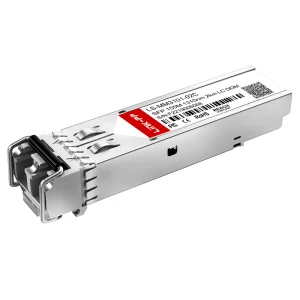
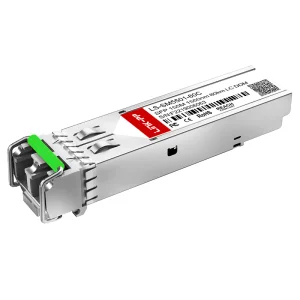
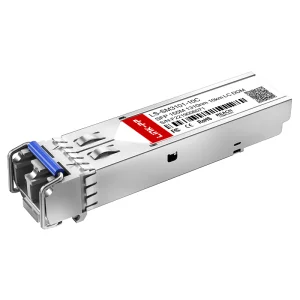
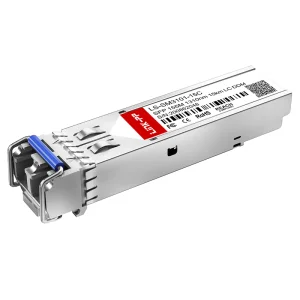
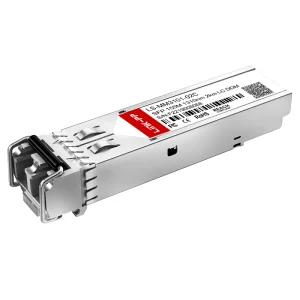
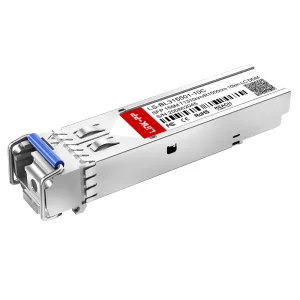
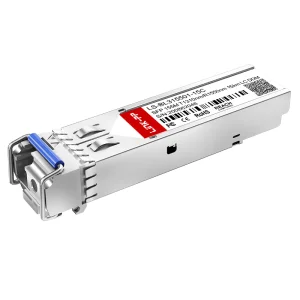
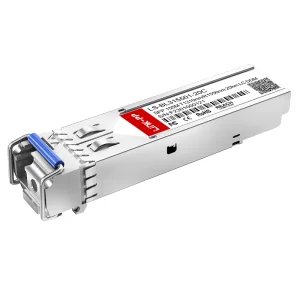
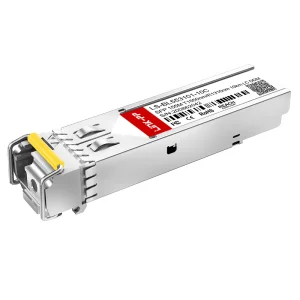
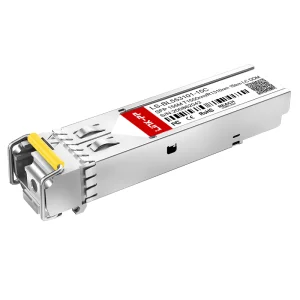
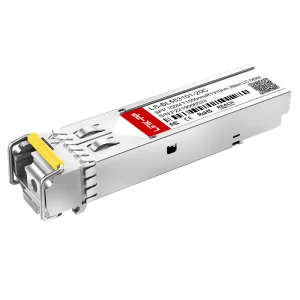
Dynafiber partners with 1,200+ global supply chain partners to source high-grade optical sub-assemblies (TOSA/ROSA) and construct premium network devices.


Dynafiber supports operators and telecom integrators in North America, Europe, Southeast Asia, the Middle East, and South America. Over our 7 years of export history, we have optimized our logistics flow to handle regional destinations efficiently.
For our buyers in Malé, Maldives, we offer direct express air shipping via major Middle East and Asian hubs, ensuring that replenishment parts and system upgrade modules reach their destinations promptly, keeping your marine and tourism operations running smoothly.
Get answers to common technical questions regarding SFP transceiver compatibility and installation in coastal and high-saline tropical environments.
Tropical marine environments expose network hardware to high temperatures, humidity, and salt spray. Standard commercial transceivers (rated 0°C to 70°C) may suffer laser degradation under these conditions. Dynafiber recommends using industrial-grade transceivers rated for -40°C to 85°C. These modules feature moisture-resistant potting and anti-corrosion gold-plated connectors, helping to prevent premature component failure.
It depends on your switch's hardware capability. Many modern switches feature multi-rate SFP ports that can be configured via firmware command (e.g., speed 100) to support 155M modules. However, some newer switches only accept gigabit-rate devices. We recommend consulting with our engineers to verify the configuration of your host devices (such as Moxa, Hirschmann, or Cisco switches) before procurement.
Deploying subsea or inter-island fiber optic cables requires a significant capital investment. BiDirectional (BiDi) SFP transceivers allow transmit (TX) and receive (RX) signals to travel over a single fiber optic strand using different wavelengths (such as 1310nm-TX/1550nm-RX and vice-versa). This technology allows operators to double their network capacity on existing fiber cables without the high cost of laying new subsea fibers.
Yes. Different equipment vendors (like Hirschmann, Moxa, Cisco, and HP) use proprietary encryption codes in their EEPROM definitions. To ensure compatibility, Dynafiber’s R&D team customizes the EEPROM code for each batch of transceivers, matching the diagnostic registers of your specific host switches.
Our quality control laboratory uses bit error rate testers (BERT) and optical spectrum analyzers to verify transmitter power and receiver sensitivity. Every 40km or 80km module must achieve a bit error rate (BER) of less than 10^-12 under simulated fiber loss conditions before it is approved for packaging and shipment.
Partner with Dynafiber for custom firmware configurations, ruggedized design, and dependable global shipping to the Maldives and beyond.
Send Inquiry Now