Dynafiber Dynafiber

2026 Best Optical Transceiver Supplier for Global Buyers?

Time:2026-09-15 Author:Sienna
0%

Choosing the right optical transceiver supplier in 2026 requires more than comparing catalog prices. Global buyers need dependable products, clear specifications, and support that remains available after delivery. A transceiver may look suitable on paper, yet fail during temperature changes, network upgrades, or extended data traffic. Small details matter.

This guide examines suppliers through practical buyer experience and technical evidence. It considers optical standards, transmission distance, wavelength options, form factors, power consumption, and compatibility with major network equipment. It also reviews testing methods, warranty terms, production capacity, and delivery performance. Reliable suppliers should provide datasheets, test reports, traceable quality procedures, and honest limitations. Claims without evidence deserve careful review.

Real deployments reveal more than polished product pages. A supplier may offer excellent pricing but struggle with customized orders. Another may provide strong engineering support but require longer lead times. These trade-offs are easy to miss. They should not be ignored.

The 2026 market also demands stronger attention to cybersecurity, environmental conditions, and responsible international trade practices. Buyers should confirm regional requirements before placing large orders. Independent verification remains valuable, especially for high-speed modules and critical infrastructure. No supplier is perfect. Even experienced teams can overlook compatibility issues during rapid procurement.

This overview helps global buyers compare leading companies with greater confidence. It focuses on measurable performance, transparent communication, and long-term service. The goal is not to promote one brand blindly. It is to identify the optical transceiver supplier that best matches each network’s technical, commercial, and operational needs.
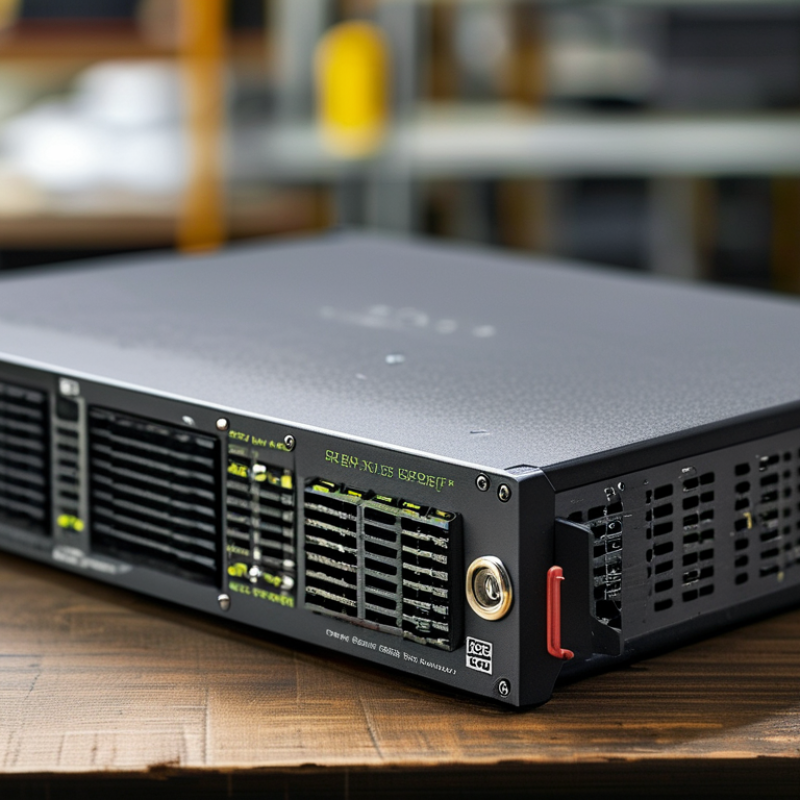
2026 Best Optical Transceiver Supplier for Global Buyers?

What Defines a Leading Optical Transceiver Supplier in 2026

2026 Best Optical Transceiver Supplier for Global Buyers?

What Defines a Leading Optical Transceiver Supplier in 2026

A leading optical transceiver supplier must prove performance beyond a polished datasheet. LightCounting’s 2024 Optical Transceiver Market Forecast identifies AI data centers as a major growth driver through 2026. It also highlights rapid demand for 800G connectivity. Speed alone is insufficient. Buyers should request measured power consumption, link budgets, bit-error-rate results, and thermal data at operating temperature.

Interoperability now defines practical quality. A reliable supplier validates modules across common switch platforms and documents firmware behavior. It should support DOM monitoring, FEC compatibility, and clear coding records. The ITU’s Facts and Figures 2024 estimates that 5.5 billion people were online, representing 68% of the global population. More traffic creates less tolerance for unstable links. That gap matters.

Supply reliability is equally important. Strong suppliers provide serialized test reports, traceable components, controlled aging tests, and realistic lead times. They explain whether a module is new, refurbished, or reworked. In field deployments, a five-minute diagnostic can save hours of rack access. However, laboratory results can mislead when airflow differs from the test setup. This is where many evaluations remain incomplete. Buyers should compare samples under their own temperature, fiber, and port conditions. Compliance documentation, warranty terms, and engineering response times deserve the same attention as price. A lower quote may conceal higher replacement risk.

Key Optical Transceiver Technologies and Product Categories

Optical transceiver selection in 2026 depends on network speed, distance, fiber type, and operating conditions. Global buyers commonly compare 10G, 25G, 100G, 400G, and emerging 800G modules. Pluggable formats simplify upgrades, while coherent transceivers support longer links through advanced modulation and digital signal processing. Shorter connections often use multimode optics, while single-mode optics serve campus, data center, and metropolitan networks.

Product categories also include SR, DR, FR, LR, and extended-reach modules. Each category matches a practical distance range. For example, SR modules may connect racks across a data hall, while LR modules support links across several kilometers. WDM transceivers carry multiple wavelengths over limited fiber infrastructure. AOC and DAC cables can reduce installation complexity for short server connections.

Real-world testing matters more than a polished datasheet. Buyers should verify temperature ratings, connector cleanliness, optical power, receiver sensitivity, and interoperability before deployment. A small mismatch can create unstable links. Field engineers should also request test reports, traceable serial records, and clear warranty procedures from suppliers. Compliance documentation supports safer international procurement and reduces customs delays.

Specifications can still mislead. I have seen distance claims change under heat, dust, or heavily loaded switches, so pilot testing remains essential. Reliability is not only a component feature; it reflects quality control, technical support, and honest communication.

How to Evaluate Supplier Quality, Compatibility, and Performance

Global buyers should evaluate optical transceiver suppliers through evidence, not polished promises. In real network deployments, small specification gaps can cause link instability, packet errors, or costly downtime. Ask for datasheets, test reports, and clear operating limits. A reliable supplier explains testing methods, production controls, and product traceability. Request sample units before placing a large order. Inspect labels, packaging, serial records, and delivery consistency.

Compatibility requires more than matching speed and connector type. Confirm wavelength, transmission distance, fiber mode, power consumption, temperature range, and digital monitoring support. Check whether the transceiver works with your switches, routers, and network management system. A supplier should provide coding details and practical integration guidance. Test samples under normal traffic and high-temperature conditions. Laboratory results alone may not reflect a crowded equipment rack.

Performance should be measured with specific targets, including optical power, receiver sensitivity, error rates, and operating stability. Ask how failures are handled and whether replacement procedures are documented. Fast technical support matters when a link fails at night. Field experience shows that honest suppliers disclose limitations instead of claiming universal compatibility. Still, evaluation is rarely perfect. A clean report can hide weak quality control. Recheck critical samples after storage, transport, and repeated installation. Keep communication records, inspection results, and acceptance criteria in writing. Reliability grows from verification, not confidence alone.

2026 Best Optical Transceiver Supplier for Global Buyers?

How to evaluate supplier quality, compatibility, and performance through standard module capabilities.

The chart compares widely used optical transceiver form factors by nominal aggregate Ethernet line rate. These standardized capabilities help buyers shortlist suppliers, but final qualification should also verify MSA compliance, host-platform compatibility, optical budget, operating temperature, digital diagnostics, interoperability, and production test records.

Rates shown are nominal module-class values commonly associated with 25G SFP28, 100G QSFP28, 200G QSFP56, 400G QSFP-DD, and 800G OSFP solutions. Actual performance depends on the optical reach, wavelength, fiber type, host equipment, and deployment conditions.

Global Certifications, Supply Capacity, and After-Sales Support

2026 Best Optical Transceiver Supplier for Global Buyers?

Global buyers should examine certification evidence before comparing prices. Reliable suppliers provide current CE, FCC, RoHS, and ISO 9001 documentation. Regional requirements may differ. Ask for test reports, certificate numbers, issuing laboratories, and expiration dates. A professional supplier can explain optical safety, electromagnetic compatibility, and material compliance in clear language. Vague claims should raise concerns.

Supply capacity must match real network demands. Check monthly output, available wavelengths, connector options, and compatibility with major switching platforms. A capable factory records serial numbers, batch data, and test results for every shipment. It should also show how modules are tested under temperature changes and continuous operation. Production figures alone can mislead. A large capacity promise means little without stable yield and delivery records. No supplier gets every forecast right.

After-sales support often reveals practical experience. Confirm response times, troubleshooting procedures, and RMA responsibilities before signing a purchase agreement. Useful support includes compatibility checks, diagnostic logs, replacement units, and clear escalation contacts. A strong team can review DOM readings, power levels, and link errors remotely. It should also protect customer data during technical investigations. Some suppliers answer quickly but provide shallow solutions. That weakness deserves attention. Request sample support cases and define service targets in writing. Reliable cooperation is built through measurable actions, not confident promises.

2026 Best Optical Transceiver Supplier for Global Buyers?

Global Certifications, Supply Capacity, and After-Sales Support — Buyer Evaluation Data Table
Evaluation Dimension Measurable Indicator Recommended Qualification Data Required Evidence Buyer Acceptance Check
Quality Management Manufacturing quality system ISO 9001:2015 certification with an active scope covering optical transceiver design, assembly, testing, or distribution. Certificate number, issuing certification body, expiry date, and certified site address. Confirm the certificate is valid and that the certified scope matches the supplied product and production location.
Environmental Management Environmental controls ISO 14001:2015 certification or documented environmental management procedures for the relevant manufacturing site. Current certificate, audit scope, environmental policy, and evidence of controlled waste handling. Verify site coverage and check whether environmental claims apply to the actual production facility.
Product Compliance Substance restrictions RoHS compliance under Directive 2011/65/EU and its amendment Directive (EU) 2015/863; REACH compliance under Regulation (EC) No 1907/2006. Supplier declaration of conformity, material declarations, and laboratory test reports where applicable. Check the declaration date, product family, restricted-substance scope, and applicable destination markets.
Laser Safety Optical emission safety Evidence of conformity with IEC 60825-1 requirements for the applicable laser product classification. Safety classification, optical-output test records, product label information, and technical documentation. Ensure the safety classification is consistent with the transceiver datasheet and end-equipment application.
Network Interoperability Protocol and form-factor support Clear compliance mapping for applicable IEEE 802.3 Ethernet specifications, MSA form factors, data rate, wavelength, reach, and connector type. Datasheet, coding or EEPROM map, interoperability test report, and host-platform compatibility list. Validate the exact combination of speed, fiber type, wavelength, distance, temperature range, and host equipment.
Product Portfolio Common optical transceiver coverage Availability of relevant SFP, SFP+, SFP28, QSFP+, QSFP28, QSFP56, QSFP-DD, or OSFP products according to project requirements. Current product matrix with operating temperature, optical budget, DOM support, power consumption, and lead time. Reject portfolio claims that do not include a complete technical specification and lifecycle status.
Supply Capacity Production readiness Documented monthly capacity by product family, with separate figures for standard products, customized products, and engineering samples. Capacity statement, production-line information, historical on-time-delivery data, and bottleneck analysis. Use a capacity figure only when it is supported by a defined period, product scope, and available production site.
Supply Continuity Business continuity and sourcing Multi-source plans for critical optical, electronic, mechanical, and packaging components; documented change-control procedure. Business continuity plan, approved-vendor process, component lifecycle policy, and product-change notification procedure. Confirm how the supplier handles component shortages, end-of-life notices, and alternate-part qualification.
Testing Capability Factory inspection coverage Automated or documented testing for optical power, receiver sensitivity, extinction ratio, wavelength, eye quality, temperature, and digital diagnostics where applicable. Inspection plan, calibrated-equipment list, sample test reports, and calibration certificates. Check measurement limits, equipment calibration status, sampling plan, and traceability to serial or lot numbers.
Reliability Assurance Qualification and stress testing Product-specific reliability data covering temperature cycling, high-temperature operating life, humidity exposure, vibration, and connector durability where relevant. Qualification plan, test conditions, sample size, duration, failure criteria, and corrective-action records. Compare test conditions with the intended operating environment rather than accepting generic reliability statements.
Customization Engineering and firmware support Ability to support customized EEPROM coding, DOM fields, labels, mechanical requirements, wavelength options, and host-platform validation. Engineering change procedure, coding sample, non-recurring engineering terms, and approval workflow. Require written confirmation of compatibility before mass production and define ownership of approved configuration files.
Lead Time Order fulfillment performance Separate quoted lead times for samples, standard production orders, customized orders, and replenishment orders. Formal quotation, manufacturing schedule, order-confirmation process, and recent delivery-performance records. Measure on-time delivery against the confirmed date, not against an informal estimate.
Warranty Product warranty terms Written warranty covering manufacturing defects, defined warranty period, return procedure, exclusions, and replacement or repair policy. Warranty document, RMA terms, failure-analysis process, and escalation contacts. Confirm whether the warranty applies to the product, installation, configuration, and shipping conditions involved.
After-Sales Support Technical response and escalation Named technical contact, documented ticket process, product troubleshooting guide, and defined response targets for normal and urgent cases. Support policy, escalation chart, sample case report, and contact coverage by time zone. Test the support process with a pre-sales technical question before placing a large order.
Failure Analysis RMA and corrective action Traceable RMA workflow with failure confirmation, root-cause analysis, corrective action, and replacement decision. RMA form, failure-analysis template, corrective-action report, and lot or serial-number traceability example. Define investigation time, reporting format, shipping responsibility, and action for repeated failures.
Global Logistics Export and delivery readiness Commercial invoice, packing list, HS classification support, export documentation, and delivery terms suitable for the destination market. Sample export document set, packaging specification, shipment insurance option, and Incoterms® 2020 quotation. Confirm responsibility for customs information, taxes, import permits, and damage claims before shipment.
Commercial Risk Supplier transparency Consistent product documentation, stable revision control, clear payment terms, and transparent notification of material or design changes. Document-control policy, product-change notice template, quotation validity, and payment conditions. Give preference to suppliers that provide auditable records instead of unsupported claims of capacity or certification.
Overall Qualification Evidence-based supplier score Recommended: 80% or higher
Pass all mandatory compliance, quality, testing, and after-sales requirements before commercial comparison.
Completed supplier questionnaire, verified certificates, technical sample approval, and signed quality agreement. Use weighted scoring: compliance 25%, product quality 25%, supply capacity 20%, technical support 15%, commercial and logistics 15%.

Note: Certification validity, production capacity, delivery performance, product compatibility, and after-sales commitments should be verified directly with each supplier before purchase. The table provides an evidence-based procurement framework and does not represent data from any specific company or brand.

Choosing the Best Optical Transceiver Supplier for Global Buyers

Choosing the best optical transceiver supplier requires more than comparing unit prices. Global buyers need stable performance across data centers, telecom cabinets, and harsh regional conditions. A reliable supplier provides clear specifications for wavelength, reach, connector type, power consumption, and operating temperature. Ask for traceable test reports, not polished promises. Small details matter. A useful report should show serial records, insertion loss, eye diagrams, and temperature results. These documents help engineers verify whether a module fits the intended network.

Experience also reveals weaknesses that product pages often hide. Request samples before approving volume orders, then test them with the exact switches, fiber types, and monitoring tools used in deployment. Check interoperability, digital diagnostics, coding requirements, and alarm behavior. A supplier should explain its screening process and replacement procedure without delay. Delivery reliability matters too. Review production capacity, safety stock, packaging quality, and customs documentation. Clear communication across time zones can prevent a three-day fault from becoming a three-week delay.

Professional support should continue after shipment. Look for engineers who can read test data, investigate intermittent links, and suggest practical alternatives. Certifications and quality systems add confidence, but they do not replace independent verification. I have seen technically attractive samples fail during long temperature cycles. That experience changed my checklist. Do not ignore inconvenient questions, especially about firmware control, warranty limits, and end-of-life notices. A strong supplier may admit a limitation and propose a workable test plan. That honesty is more valuable than a perfect sales presentation.

FAQS

What should define a leading optical transceiver supplier in 2026?

A strong supplier proves performance beyond polished datasheets. It provides measured power, link budgets, error-rate results, and thermal data. Speed is not enough. Real test evidence matters more.

Which network speeds should buyers compare?

Buyers commonly compare 10G, 25G, 100G, 400G, and emerging 800G modules. The correct speed depends on switch ports, traffic growth, and upgrade plans. Faster is not always better. Power and cooling may become limiting factors.

How can buyers check module interoperability?

Suppliers should test modules across common switch platforms. They should document firmware behavior, monitoring support, error correction compatibility, and coding records. Ask for platform-specific results. A small mismatch can destabilize a link.

How should buyers select between SR, DR, FR, and LR modules?

Selection depends on distance, fiber type, and operating conditions. Short rack connections often use SR modules and multimode fiber. Longer campus or metropolitan links may need LR modules and single-mode fiber. Distance claims need local testing.

When are coherent or wavelength-division modules useful?

Coherent modules suit longer links using advanced modulation and digital signal processing. Wavelength-division modules carry multiple wavelengths over limited fiber infrastructure. They can expand capacity without installing more fiber. The design still needs careful optical planning.

What testing should happen before deployment?

Check temperature ratings, connector cleanliness, optical power, receiver sensitivity, and switch interoperability. Test samples with the intended fiber and port conditions. Test it locally. Laboratory airflow may differ from a crowded rack.

What supply and traceability records should buyers request?

Request serialized test reports, traceable component records, controlled aging results, and realistic delivery estimates. The supplier should clearly identify new, refurbished, or reworked modules. That detail prevents unpleasant surprises. However, records alone cannot prove field reliability.

How should buyers evaluate support, warranty, and total cost?

Compare warranty procedures, compliance documents, replacement policies, and engineering response times. A lower quote may hide higher replacement risk. Ask how quickly a five-minute diagnostic can become technical support. Our evaluation can still be incomplete. Pilot testing remains necessary.

Conclusion

Choosing the best optical transceiver supplier in 2026 requires more than comparing prices. Global buyers should assess a supplier’s expertise in current technologies, including high-speed Ethernet, fiber types, single-mode and multimode applications, wavelength options, and data center connectivity. A reliable supplier should offer a broad product range, stable performance, low power consumption, strong interoperability, and flexible solutions for different network environments.

Quality evaluation should also include manufacturing consistency, testing procedures, compatibility with major network platforms, product documentation, and long-term reliability. International certifications, secure supply capacity, efficient delivery, responsive technical support, and clear warranty policies are equally important. The ideal optical transceiver supplier combines advanced product development with dependable quality control, scalable production, transparent communication, and professional after-sales service. By considering technology, performance, compliance, logistics, and support together, global buyers can make a confident sourcing decision and build a more stable, efficient, and future-ready optical network.

Sienna

Sienna

Sienna is a skilled marketing professional with a deep expertise in our company’s core products and services. With a passion for innovation and detail, she plays a pivotal role in crafting insightful blog posts that not only highlight the unique features of our offerings but also provide valuable......